Wednesday, July 26, 2006

Even at home...


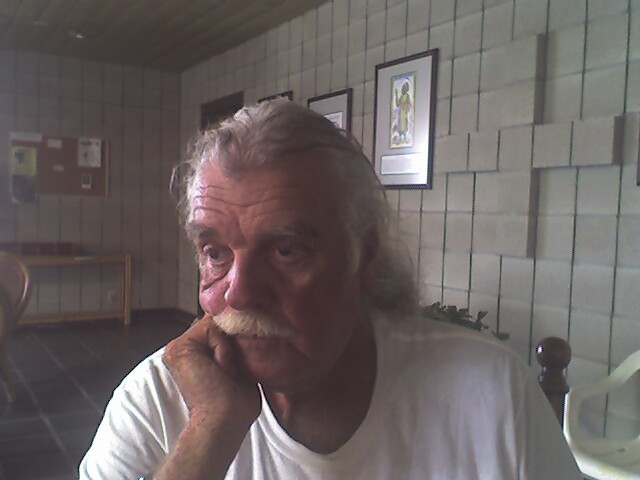
I've known him for 10 years. We met on the beach after I watched him for a few days, talking to some unknown person out there in the ocean, waving his hands and bowing. He spent days alone, lying on a dirty blanket, always in the same place right at the edge of the sand where it met with the high tide. No one would sit next to him even when the beach was crowded. He wore the same clothes day in and day out, long hair matted, dirty finger nails, and drinking from a bottle in a paper bag. I found out later that the bottle was simply filled with water. I was intrigued by his actions, and embarrassed by the actions of others and myself: avoidance and distrust.

In the early evening, he would stand at the edge of the water, look west, lift his hat and bow, to nobody. He would raise his hands, wave, and make the shape of a heart in the air and I could hear him say "I love you" over and over again. He would stay there and do this until the sun went down behind the horizon, and with his head hung low, shuffle up the beach and disappear for the night. I was to find out who he was and to whom he was talking to.

I went up to him late one afternoon, introduced myself and asked if he would like some company. Without any hesitation, he said yes, and for the last 10 years, we have met and talked for hours almost every day of my time on the beach each summer. I saw him again last week. Hugh is 64 years old, has 2 master's degrees, taught poetry in college, and lived la vida loca high on LSD from the time he was 20 until he crashed at the age of 40. He has been homeless off and on (more on than off) ever since. His mind is burned with LSD, flashbacks are frequent, but during his lucid times, he is smart, gentle and humble. Those times are becoming fewer and fewer, and last week, it was obvious that he was getting worse; he couldn't remember where he taught, went to college, or when we saw each other last. He sleeps in a park off the beach. I took him to one of our favorite places, Prince of Peace Abbey. We attened mass, we prayed, and talked for several hours, looking at the ocean from atop a hill where the abbey is. I listened as he moved from one subject to the next, sometimes making sense, most of the time not. We talked about Joe. She is the person he talks to, who he sees on the ocean in the evening, his love, his life. He says she lives on a sailboat and stays in the marina near the beach. I've checked. She doesn't exist. I've told him so, only to see his eyes water up and he becomes quiet, and he goes on talking about her as if he didn't hear me. I don't bring it up anymore.

Last week when I dropped him off at the park, I hugged him, held his hands as we prayed, and felt comfortable being with him despite what he was: a homeless, wasted, lonely man. I have grown to love him for who he is: a brother who seeks only that to which he is entitled to - dignity and personhood. He is no different than the rest of us. We look to others for love and support, and welcome the warm embrace of those we love, the softness of a touch, the smell, the feel, the words, and the look they give us with their eyes. Hugh looks to Joe for all of that as well, raising his hat and waving his hands, making the shape of a heart with his hands to someone he loves out there in the ocean, wanting to feel her warmth. He believes in her. A fool's errand. But a sweet, gentle fool, who lives a life as a consequence of what he did to himself in the past. I look past that, and see in him, the "forgotten children" to whom we are committed...the innocent, abandoned, lonely, and forgotten children. Hugh...I think of you often and may you find "Joe" wherever she is.

In all things, give thanks...

David

copyright 2006

Wednesday, July 12, 2006

Swaziland Medical Clinic update...


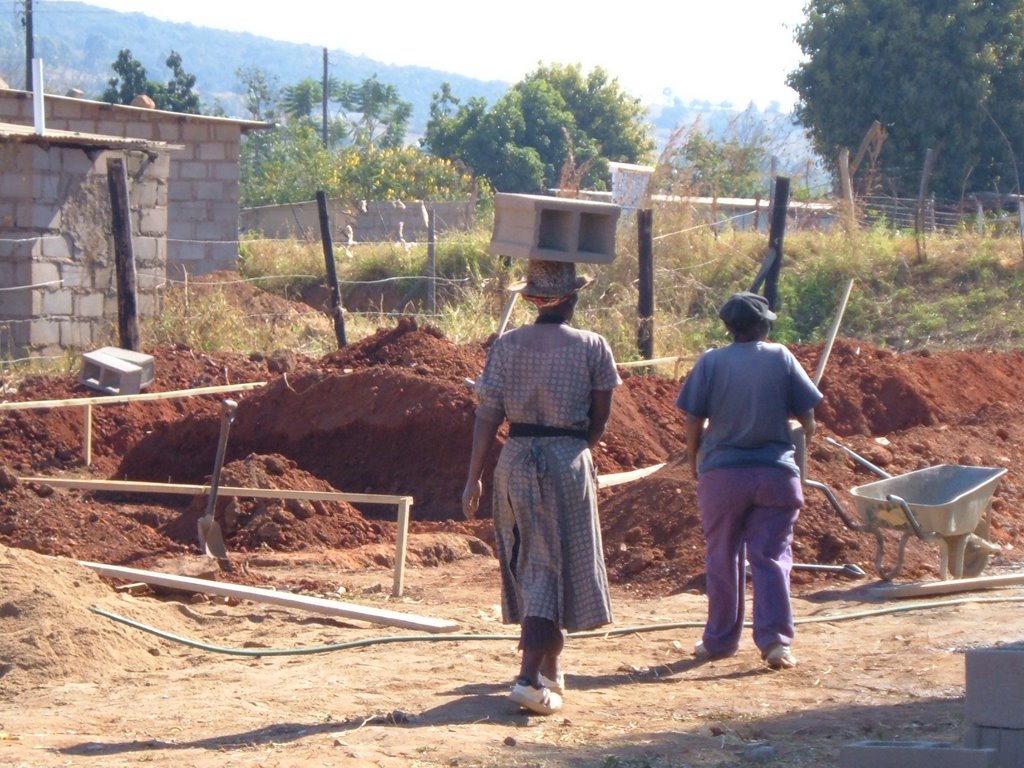
I got an email from Daran Rehmeyer who is overseeing the building of the medical clinic in Mbabane. He included pictures of the beginning construction and since the pictures have been taken, the slab has been poured and the block walls are going up. By the time I get there in about 3 weeks, things should be moving along pretty rapidly. I just finished putting together the equipment and medicine list for the clinic. Pray that we can get all that we need and in time for the medical team's arrival in October. I'll keep you all posted. And as you look at the picture above, realize that it was only about 5 months ago that I visited Swaziland...He moves things forward quickly when it is in His favor and is pleasing to Him....

In all things, give thanks.

David

Tuesday, July 11, 2006

Swaziland's Forgotten Child....are we ready?

Teresa Rehmeyer is a missionary and a nurse living in Swaziland. We met when I was there doing my assessment trip for MOM to see if we could be of help as a medical team. She is one of several missionaries there with Children's Cup who care for the "forgotten children" at the Care Points. She sent me an email today asking for some medical advice on a child she knew...I need to share, because those of you who will be going with me on the October 2006 trip will need to prepare yourselves...

A 3 year old little girl was found in the parking lot of Mbabane Hospital a few months ago. She was placed in Ward 8, a ward for abandoned children (some of you have seen my pictures of the ward and have head the stories). She had been terribly sexually abused, physically torn, and had large genital warts that were painful. She is HIV positive as well. In her blog (http://rehmeyers.blogspot.com), Teresa describes her time with the little girl. See if you can get through it without breaking down...I couldn't.

We will be exposed to alot in October. Most of it will be good, exciting, and blessed. We will also be faced with evil at times. The children we will see have stories. The childen we will see have pain. But the children that we will see will also have been touched by the hands of Teresa and Daran and Ben and Dave, missionaries who spend their lives bringing His love to those "forgotten children".

I pray that we too will touch the lives of those children through our medical work: healing as we can, loving always...as His servants.

In all things, give thanks.

David

Saturday, July 08, 2006

Gaza: A place of hurt...


Just 8 months ago, I traveled to Gaza the day after I was in Amman, Jordan. I was in Amman on the day that the hotels were bombed, and was just a few hundred yards away from them visiting with an American missionary who is a pediatrician working in the refugee camps in Jordan.

Getting into Gaza was difficult enough. Getting out left a little to be desired. I traveled with Peter Omran, the Project Manager for MOM for that area. Peter used to be a member of the PLO, Palestinian Liberation Front, who came to Christ, and left the PLO. There we were, Peter, an ex-PLO and me, a Messianic Jew (a Jewish believer), traveling to Gaza to see if we could get a medical team into the country to take care of hundreds of refugees. Here is what I saw and did:

We left Amman to go to Gaza via the road to the Dead Sea passing the Baptismal site for John the Baptist. We arrive at the boarder crossing only to find 1000 cars already lined up to get across into Jerusalem. We use our pull with American passports and get to the front of the line and realize that even with that we have a long wait. We decide to use a "VIP" service that for $82 a person will do all the paperwork, and move us through "no man's land" and get us through the Jerusalem side with assistance. It seems like a good idea. We pay a 5 JD departure tax to get out of Jordan. "No mans land” is simply that. A stretch of 5 kilometers that belongs to nobody but is protected by everybody. We go through no less that 4 checkpoints, see multiple bunkers and multiple armed sites. Our passports are checked at each check point. We arrive at King Hussein Bridge and cross the Jordan River. Into NML. We arrive on the Jerusalem side at the Allenby Bridge check point. Israel security is very thick and a lot of questions are asked. As we cross NML we see the city of Jericho and Mt. Temptation. Getting through from Jordan to Jerusalem takes us almost 8 hours with clear evidence of harassment and discrimination from the Israelis to the Jordanians. There is a bomb scare on the Israeli side and we are all told to stay put. There is tension everywhere. The Israeli undercover agents are not so undercover. They all carry AK47's in plain clothes and look like they are ready to use them. We arrive in Jerusalem and go to the Jerusalem Hotel for a late lunch and wait for John Carlock the AOG missionary from Gaza to meet us and to take us into Gaza. He and his wife have been there for about 2 years and are the only Americans in Gaza. They have 2 boys, 8 and 6 and a girl 2 years old. Their faith is very evident. They live in a walled in complex but feel safe being in Gaza. We get to the Gaza boarder and find the city surrounded by huge walls, like Berlin used to be years ago. We go through 3 more check points, passport control, and then we enter a bunkered tunnel that is a half mile long that we have to walk though carrying all of our stuff. The walls are riddled with bullets and there are cameras everywhere. We feel like we are entering a prison and we are. Gaza is a prison. No one can come in unless they are with the UN or are with an NGO. I sent my passport information weeks ago to John who got me clearance to enter Gaza as a member of AOG. No one can get out. Before the disengagement, 100,000 Palestinians from Gaza would go to work in Israel and return at night. Now they can’t. 99% of all Palestinians are unemployed. The Hammas rule the streets and the Palestinian authority rule the government, or what they think is the government. Before the disengagement there we about 6000 Israelis living in Gaza in 20% of the land and 1.4 million Palestinians were living in the other 80% of the land. Israeli spent billions of dollars trying to protect those Israelis and finally disengaged from Gaza, pulling out all the Israelis. That land now belongs to the PA Authority. There are multiple refugee camps in Gaza that house the Palestinians. Jabalia is one of them, and that is where we went.

The Gaza Lighthouse School is what John is responsible for. It is a school that is from 1st to 3rd grade and has 60 students from the refugee camps that are bussed in. It costs$40 a month to support a child and they have full sponsorship form the Baptist churches in the US. Of the 60 students only 1 is a Christian. The 3 teachers are Christians. MOM is trying to start an after school program for about 100 kids from the Zeitun area of Gaza. The school is very nice. It used to be a nursing school. The top 2 floors are not being used and can be easily turned into a medical clinic.

I noted that there is a lot of mental illness, depression, etc, and bed wetting in children because of the atrocities that the children have witnessed. The refugees are so poor that the children are kept from school to sell peanuts in the street which no one buys because there is no money to buy peanuts with.

The UN is very active with the refugees. The UN Relief Works Agency is responsible for having medical clinics for all refugees and I visited one which is fairly modest with doctors, but the care is suboptimal. Medicine is scarce.

I met with the administrator of the Ali Arab Hospital which began in 1882 as a CMS hospital from England then became a Baptist hospital in 1952. It is now under the Episcopalian diocese of Gaza. It serves as a base for foreign teams to do plastic and orthopedic surgery. Even though it is a Christian hospital only 10% of the staff are Christian. It has 80 beds of which only 50 are used because of funds. It is primarily a surgical hospital and is well equipped, albeit with old equipment. The average cost per bed per day is $98 none of which the patient pays. The hospital has a $600,000 deficit per year. It receives help from the UN and private donations.

We finally went to the Jabalia refugee project. I can't describe what it was like. The buildings are simply shells with as many as 10 people living in small room without heat or electricity. They do have water. We visited 5 families. We visited a small dwelling with 5 severely mentally incapacitated women living there under the care of an elderly woman who herself had cancer (I have pictures that describe it better than he words ever can). The poor and destitute are beyond hope. We were with 2 of the refugees who themselves began an organization to get food and goods to the poorest of the poor. It was quite a testimony to their love of humanity.

Gaza in short is a prison with walls, filled with people who have no hope, and children who are forgotten. Today, July 8, 2006, the Israeli army is now only 500 yards from Zeitun, the refugee camp that I wanted to take a medical team to. The war is heating up. Zeitun may fall. The refugees that we met are in hiding, unsure of what is going to happen next. And the "forgotten children" are hungry, alone, and scared. Medical Mercy. A medical team from Mission of Mercy, wanting to go, but can't. Maybe another time. Maybe in God's time. We'll be ready.

In all things, give thanks.

David

A Typical Medical Mercy Team

Medical Mission teams can take on many different faces. Our typical team includes a Medical Team, a Dental Team in the near future (including extractions, restorative work and cleanings), and an Optical team to fit reading glasses. We will eventually establish special Cranio-facial teams that can be organized to work in local hospitals to provide cleft lip/palate repairs and General Surgical teams to help a community catch up on a backlog of hernia and gallbladder surgeries. We will evaluate those needs for each trip, and identify local hospitals that we can partner with to do the surgeries. We may consider bringing physical therapists to do work treating patients with musculoskeletal complaints. The Medical Missions teams are as diverse as the needs identify.

What follows is a very basic description of what a typical team would do, and how the clinics are set up.

GENERAL POINTS:
To explain briefly, patients line up outside of the clinic usually quite early in the morning. The lines are then organized by specialty: medical, dental, optical. The patients are then registered with their name and address placed on the encounter card. They then proceed to the triage waiting line, followed by triage where a brief history and vitals are recorded. After triage patients are moved to the appropriate waiting line for the service they are presenting for. The patients then receive their exams and move to the spiritual counseling line, receive spiritual counseling and then wait for their medications at pharmacy. After pharmacy they are lead outside of the clinic to allow optimal flow.

The above schematic works great in a large sanctuary, school or hall utilizing string and curtains to make cubicles for the examiners or simply having enough space between examiners for a comfortable examination of the patients. We have conducted clinics in schools with classrooms and in villages in open and closed buildings and under huge tarps. Each of our clinics looks different, but all follow the flow pattern above. We have always been able to have a similar flow, regardless of the setting, though creativity is often required.

We limit patients to one service through the clinic at any given time as the lines waiting out front may not fairly get a chance at care if one patient is allowed to see medical, dental and optical in one pass. After a patient completes a pass through the clinic, they are welcome to join the line of their desired service if it’s not too long or return later on another day of clinic if we return there.

REGISTRATION:
What we have found is that encounter cards that are numbered need to be given to registration little by little throughout the day or ideally before we arrive with careful attention paid to the flow of the clinic and any backlog in the pharmacy or counseling area. Numbers from 1-100 are used for a 2 hour block of time: 8am-10am, 10-noon, 1pm-3pm, 3pm-5pm. This limits the overwhelming numbers on the examiners, and keeps the crowds down. Depending on the number of examiners, we can either increase or decrease the numbers. 100 patients in 2 hours seem to work well with 3 examiners. We have asked local ministry helpers, the local pastors, and the missionaries to disperse the numbered cards so that they may follow up with those whom they have found to be in most need.

TRIAGE:
The triage nursing area provides a great function to supply a brief history and to check vitals signs on patients. Ideally there will be an automated blood pressure cuff to allow rapid assessments in a noisy environment. We find that two people staffing this area works best and one can be pulled aside to assist a physician in performing exams or checking a blood sugar, pregnancy or urine test. Documenting allergies and current medications greatly assists in the medical evaluation and enhances patient care safety. There are many times however when we have had to bypass the triage area and see patients directly due to the large numbers of people waiting to see the team.

WAITING AREAS:
Adequate seating areas should be arranged using chairs or benches to allow an orderly and comfortable flow for the patients who will be spending quite a while waiting for the various phases of the clinic. Adjustments may need to be made to add to or take away from the various lines of benches to accommodate the optimum flow. If at all possible, finding an area out of the elements for the usual long line of patients outside is ideal. The clinic should not be overrun, however, so in many locations it is just impossible to arrange this. In this area, we have found that local pastors and the missionaries can interact with the patients, introducing them to his word. Public health issues can be taught such as dental care, hygiene, and nutrition.

MEDICAL CLINIC:
Since each examiner will move at a different pace, having one general waiting line is better than having individual lines for each examiner. This way, the next patient in line will be taken by the next available examiner.

Each examiner in an efficient medical mission clinic with minimal paperwork should be capable of seeing 50+ patients per day which is a pace of about 6+ patients per hour. That would be a minimum. There have been times when we have been able to see twice that number in an hour. A balance must be sought in the humanitarian need to examine as many people of the community as possible, with the need to provide quality care and an adequate presentation of Christian love and the Gospel message. If we are working in an area of large population we find that having the examiners stick to medical care and allowing the spiritual counselors to handle the Gospel presentation and counseling allows the greatest efficiency while still allowing the spiritual goal to be accomplished. In such a setting we would ask our examiner to pray that the Holy Spirit would guide them to knowing when they may be asked to initiate spiritual discussion as at times the examiner who touches the patient can provide the greatest witness for Christ. We pray that God would bring those to the clinic who need to be there as a mission clinic will always be a limited resource to a large population of needy people.


DENTAL CLINIC:
The dental clinic requires a location with good lighting. If a source of running water is available then situating the dentist near that area (if it allows for appropriate patient flow) is ideal. Also important is access to electricity if compressors are being used to allow drilling and cleanings. Portable generators may be necessary. Provision must be made to allow for sharps handling and disposal. A great system for sterilization can be made using a series of baths including soapy water, gluteraldehyde, clean rinse and then steam sterilization using a pressure cooker over a hot plate.


OPTICAL CLINIC:
The optical clinic will also require an area with adequate lighting. Having tracts available or a Bible in the local language will allow the examiner to test the reading glasses on each patient. A small kit with needle and thread or similar can also allow testing for those who are illiterate.

SPIRITUAL COUNSELING:
Medical Mercy believes that spiritual counseling remains a number one priority. We would require a local church or group to commit to a follow up plan in order for us to agree to put on a clinic. Ideally the local church or churches participating will have their Pastor(s) present and actively counseling along with their best and most mature church leaders (deacon and deaconess type leaders). We would look to the missionaries for guidance on how best to proceed.

PHARMACY:
A pharmacist and assistants will set up, supply and distribute medications. It is imperative that traffic flow in and out of the pharmacy be kept to a minimum as this area tends to be a center of attraction and efficiency mandates the area be kept clear of extra non-essential staff or visitors.

SUPPORT STAFF:
In addition to the clinical staff, I would utilize a support staff utilizing local church volunteers and United States based volunteers. There are almost always more people who want to help than room to allow them. We would assign roles and possibly do so in shifts.

US based team:

Physicians: 2-4
Dentist: 1
Nurses: 2-4
Pharmacist: 1
Child Life Specialist: 1
Optometrist: 1
Support lay staff: 2-5
Total team members: 10- 18

Country support:

Interpreters: 6
Missionaries: 2
Pastors: dependent on location
Drivers: variable
Total team members: 8-10

Medications: enough to treat 1500 patients

Dental equipment:
Portable dental extraction and restoration equipment


Typical Medial Clinic setup:

Registration
Holding
Medical exams
Dental exams
Vision exams
Public health education
Pastoral counseling

These teams are specific for a particular country in terms of medical needs and are lead by an experienced phyiscian, nurse, and lay person. New team members are always welcomed, and become an important part of who we are.

In all things, give thanks.

David

Thursday, July 06, 2006

What is a "Forgotten Child?"


I've been getting a lot of questions recently about who these "Forgotten Children" are that we are talking about. Mission of Mercy has a unique vision for a specific group of children who have largely been "forgotten" by other child sponsorship organizations:

-Children impacted by armed conflict
-Children impacted by HIV/AIDS
-Street children
-Victims of child trafficking
-Children under five struggling for survival

These are children who barely survive in the midst of extremely difficult circumstances. Every day, forgotten children are exposed to multiple threats to their physical and mental well-being. Forgotten children grow up without access to proper adult care and attention. Their lives are led outside of the protection normally extended to the young and vulnerable.


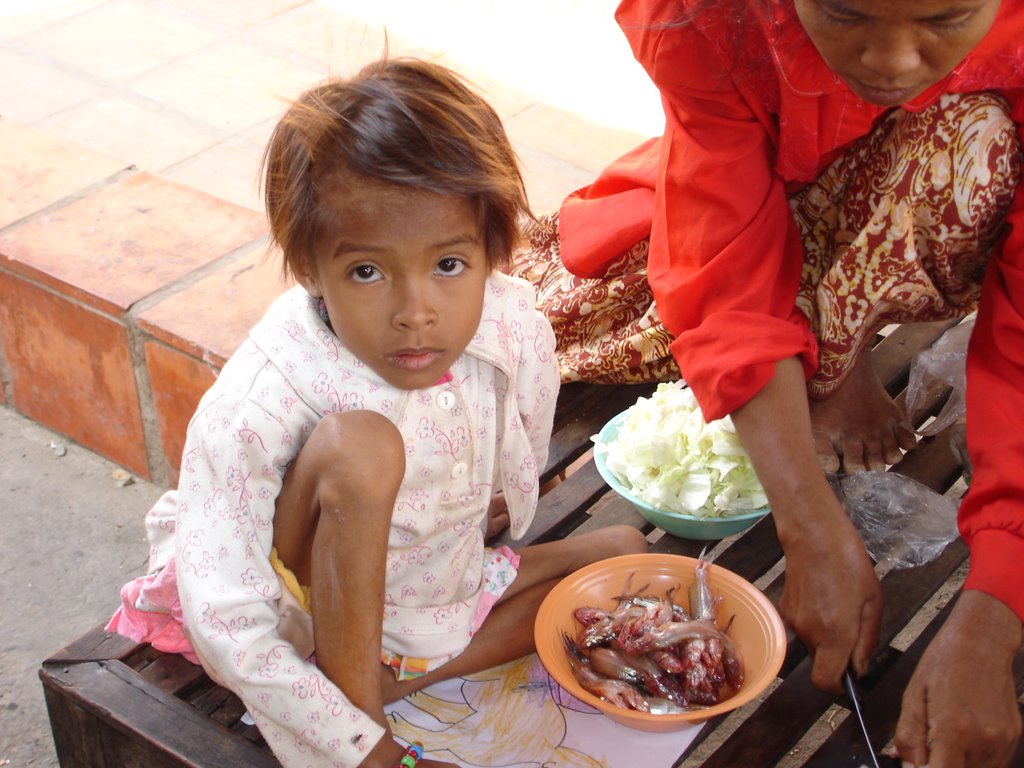
We have seen these children on our trips to Cambodia and my trips to Jordan, Gaza, Ethiopia, Egypt, and Swaziland. Their faces are all the same. Their smiles contagious. Their plight is evident.

What "Medical Mercy" is doing, is bringing health care to them through our trips and medical clinics, ensuring that their health is maintained, giving them the opportunity to grow up in a loving God- filled environement through the work of the missionairies we partner with.

In all things, give thanks.

David
Saturday, July 01, 2006

When there is nothing you can do.

He died last night. Steven was 17 years old, had leukemia, and struggled with life for several weeks while in the intensive care unit. He and I had a fairly good relationship, sharing stories and simple hellos. His mother is who I couldn't relate to. She was angry, obstructive, abusive, and confrontational. And she was a Christian. She had incredible faith but little tolerance for reality. As a Christian I tried on many occaisons to try and see past her faults and the way she treated us. I wanted to simply put my arms around her, pray with her, share scripture with her, and pray with Steven. She wouldn't let it happen. Her character and her demeanor prevented it. Or so I thought. Once again, my pride and ego prevented me from looking past "what" she was and really seeing "who" she was: a mother hurting as her son died.

As we prepare for our medical trips, we will be faced with those countries who hate us, who don't want us there. It is that very obstruction that we must look past, with Christ in our hearts, accepting the slap and "turning the other cheek". I could have done that with Steven's mother but chose not to. When we feel there is nothing more we can do, look to see if it is really true. It may simply be because we chose not to do anything more. And that is where we need Him in our lives to guide us forward.

In all things, give thanks.

David

copyright 2006

Saturday, June 24, 2006

Thankful for what we have


There are those who have and those who have not. It is this very issue that brings me to write about an event that in itself is horrific, but in general is reality and worthy of sharing, if for no other reason, than to make us all aware of what we have or have not.

It is common practice in Cambodia for three to five people to ride on a small motorbike to get around. Usually it is a family, the father driving, a small one or two year old on his lap holding on to the handlebars, a toddler right behind him, and the mother on the back riding side saddle. This event involves the toddler who for whatever reason, fell off the bike, and in landing in the street proceeded to break both of her forearms and wrists in 3 or 4 places. A missionary happened to be in a truck directly behind the accident, and stopped. He picked up the child, put her and the family in the truck, and drove them to the local hospital. He dropped them off for medical care and left. The next day he returned to see how the little girl was doing only to find the mother wailing in the street, clutching her one year old, and the father catatonic. The missionary asked where the little girl was, and was led to a cot. There lay the little girl with both her arms amputated at the elbows. He was speechless. When he could talk, he grabbed the physician and demanded to know what happened. The answer was simple: the family had no money, and without money, there would be no surgery to place pins, screws, and plates to fix the fractures. There would be no casts, and no follow up care. No money, no medical care. It was decided that the best thing to do would be to amputate the forearms, as the surgery for that was quick, and the care needed afterwards was minimal. And that was that. No consent, no discussion, no remorse. It is this very event that was shared with me that made me realize that in fact we are those who have.

What we have here are conflicting values. Here was a physician who is supposed to act as an agent of good, but does evil. But in his defense, could he have done anything else? The culture, the environment, the demands, and the expectations would not allow him. Trying to do good things for people can be very hard indeed. Look at our own environment and culture: managed care regulating what we can do and those who are without health insurance demanding care and procedures that are beyond the reasonable. We work in a medically privileged society, primarily because we have. That family in Cambodia had not, and they paid dearly for it.

I don’t try to explain these kinds of events because they can’t be explained. Some things in life just happen, and maybe they have a reason, and maybe they don’t. In either case, the best we can do is to remember and learn from the moment. I studied medical ethics under Dr. Pellegrino at Georgetown, and remember the words he ingrained in me daily: “health care is not a commodity but a human good.” That simple statement continues to give me reason to keep on caring for children who are ill and injured through no fault of their own. Look around at our own lives and be thankful for what we have, and ever mindful of those who have not. That might not be enough for everybody, but it’s enough for me.

In all things, give thanks…

David

copyright 2006

The Mission of Mercy Medical Clinic in Mbabane, Swaziland

It's done. Ray Eynon, a friend for years and a brother in Christ, took my ideas and thoughts on how a medical clinic should flow, and put it down on paper to fit into the foundation and structural walls of a common Care Point building. Ray is a well known architect in these parts, having designed many churches, and worked with me in building a medical clinic in Mexico. I'll be in Mbabane the early part of August and will see the clinic as it is going up. It should be ready for our medical team when we arrive in October of 2006. It will have 2 exam rooms, a nursing triage station, a waiting room for 20 patients, a lab, a pharmacy, storage and 2 toilets. Pictures to follow.

David

Wednesday, June 21, 2006

Swaziland Discovery Trip March 2006


SWAZILAND
March 14 – 19, 2006

INTRODUCTION

Four in every 10 people in Swaziland are HIV positive. The life expectancy is 33 years old (2005 estimate) and is expected to drop to 30 years old by 2010. A third of all children are without parents. Half of the patients in the hospitals have AIDS, and an estimated 50,000 people are dying each year from AIDS. Most AIDS victims never see the hospital and die at home most of the time alone. The orphaned children are who we are concerned about, and it is with that in mind, that I went to Swaziland to look at the medical care available for the “Forgotten Children” cared for by Children’s Cup and Mission of Mercy. The result is both encouraging and overwhelming.

COUNTRY OVERVIEW

Swaziland is a country slightly smaller than the state of New Jersey and has a population of around 1,173,900 people. The figure is inaccurate because of the AIDS pandemic, the lack of current census data and the lack of documentation of those who die or who have HIV/AIDS. Swaziland is a land locked country in the north eastern portion of South Africa and is a monarchy. Agriculture occupies more than 80% of the population and the country is heavily dependent on South Africa from which it receives about nine-tenths of its imports and to which it sends nearly three-quarters of its exports.

MEDICAL FACILITIES AND PROFESSIONALS

Medical care is far from adequate. The hospitals are antiquated, the equipment is non working and the facilities are dirty, crowded and poorly staffed. Nursing staff are obtained from local training programs which in themselves do not have enough teachers to educate the students. There is no medical school and those who wish to become doctors travel to other countries to receive their medical training and do not return. The doctors who are practicing in Swaziland are from Cuba, Zambia, Egypt, Ethiopia, and other outside countries. I was not able to determine their quality of education, nor their clinical competency, although I met 3 doctors, 1 of whom seemed average in his knowledge base, 1 Cuban doctor who I could not evaluate, and an Ethiopian pediatrician who had a personal bias towards palliative care for children with HIV, citing the futility of trying to treat children with HIV/AIDS only to have them die anyway.

The 2 hospitals we visited were as described above. The first, Raleigh Fitkin Hospital, is a Nazarene associated hospital, with some confusion as to who actually owns and runs it. The second was the government run hospital, Mbabane Government Hospital. The wards and the outpatient clinic were both below standards even for a comparable under-developed country (Ethiopia for example). Physician availability was marginal if non existent and nursing care was absent. The Matron of nursing shared that the nurse to patient ratio during the day was 1:25-35 and at night was 1:45. This would eliminate any care what so ever for a patient from that nurse. The wards were crowded, and babies were lined up on a table side by side, with their mothers standing at their feet with no place for them to sit. The babies we saw ranged from 1 month to 1 year, all with IV fluids running, and all clearly critical. We saw 8 babies one afternoon, and when we returned the next day, 2 of them had died during the night. I had asked the pediatrician about aggressive care for the babies, as it was clear to me that several of the babies needed additional care and intervention. He remarked that they are “heroic” and described their intervention, but it was hard to believe that it was done. There is no equipment available to do what he described.

The out-patient clinics were crowded and always full. There is a VCT clinic (Voluntary Counseling and Therapy) where patients would go on their own to be tested for HIV and counseled and started on anti-retroviral (ARV) therapy. The follow up on these patients was admitted lacking as stated by the counselors. Many patients never returned and therefore the number of people with HIV/AIDS and the mortality rate is inaccurate.

An exciting project exists on the other hand. Baylor University in association with Bristol-Meyer has a brand new outpatient pediatric clinic for children with HIV/AIDS. We visited it and met 2 American pediatricians who work there. The facilities are modern and clean. It has just opened and serves only children with HIV/AIDS and their families. We established a relationship with them for referrals.

We met with SwaziPharm, a wholesaler of medications and equipment in order to establish a relationship for the purchase of both medications and equipment. We toured the facility and were impressed with the inventory and feel that it will serve as a resource for our medication and equipment needs.

A mobile clinic was seen that was bought to Swaziland by a volunteer organization and has a fully functional dental chair with equipment run by a generator. It is a converted horse trailer and fairly large, but will serve well for the dental part of medical missions.

CHILDREN’S CUP, CARE POINTS, and MISSION OF MERCY, MERCY CENTERS

Care Points serve a resource for holistic care for orphaned children. The medical component is what I looked at, and Children’s Cup has done a wonderful job of providing healthcare to those orphans. Teresa Rehmeyer who is a missionary and a nurse, cares for all the children served by the Care Points, giving basic medications and healthcare as needed and referring those who need advanced care to local hospitals and clinics. Each Care Point has a small room that is designated as a medical room and is stocked with basic medications.

Mission of Mercy will be building 3 Mercy Centers, physically the same in structure as the care Points, and similar in holistic approach as Children’s Cup.

There will a total of 12 centers serving approximately 3250 orphaned children. That number alone dictates the need for a comprehensive medical system solely for those children.

SUMMARY

With 12 centers and approximately 3250 orphaned children, the establishment of a dedicated medical system is recommended. This can be accomplished using a 3 tier system, all of which is either in place or obtainable. Meeting the healthcare needs of these children early will help prevent long term effects of chronic illness and perhaps prevent devastating terminal illnesses.

Sunday, June 18, 2006

In the beginning....

1 Thessalonians 5:16

There is never a better time to change how we look at life, than when we are told. Over the last 18 months, life has changed, priorities have changed, and God' purpose for me has become more clear. I began a loose association with Mission of Mercy www.missionofmercy.org in November of 2004, taking a medical team to Cambodia, and have made 8 trips there since. The relationship with Mission of Mercy is now formal, and more countries have been added, visited, and planned for.

Things have been moving at a pretty brisk pace over the last few weeks. Many of you have either participated or have declared a desire in your heart to be a member of the medical team that serves the “Forgotten Children” in countries served by Mission of Mercy.

I resigned as Medical Director and Division Chief of Pediatric Critical Care at Phoenix Children’s Hospital in order to follow God’s command to serve in counties where medical care is lacking. I am blessed to be a part of Mission of Mercy serving as their Medical Director, assessing, coordinating, implementing, and delivering medical care to the countries and children they serve. I am still working full time as an intensivist at PCH, but my time off clinical service gives me the opportunity needed to travel. The schedule is hectic, but purpose driven. Since we have started doing our medical trips, you and I have made 8 trips to Cambodia in a year and a half, and have cared for over 10,000 patients. Most importantly, over 10,000 people have witnessed Christ through our work. Our work continues.

Let me go over who the key players are. There are 2 people at MOM who I work with and who support our mission: Jack Eans and Wayde Goodall. Both are passionate about our work, and are excited about what we do. Don Christensen is our “benefactor”, finding funds for us when we need them the most, and working by our side as a member of the medical team. Dr. Troy Nelson is my brother in Christ, having served with me on every single medical trip so far. Kelly Ramsland is my right hand person: she is the “administrative” side of the ministry. All of you have served in some capacity on each team and for that I am thankful.

I have also made several assessment trips this year to countries in need of medical care: Jordan, Gaza, Ethiopia, Egypt and Swaziland. As a result we have identified and begun medical intervention programs in several of those countries:

Egypt: in Cairo, there is a “garbage city” that has a 4 story school house in the middle of it; I identified a floor that we will be building into a medical clinic with exam rooms, a small lab, etc. This will be available for our team when we go there.

Ethiopia: in Addis Ababa there is a medical clinic that will be established for the care of over 2000 MOM children. This should be available for our team when we go there.

Swaziland: we will be starting construction on a medical clinic this month. This should be available for our team when we go there.

Cambodia: we built a medical clinic in the Salaa Hope School in Battambang.

As a result of the assessment trips, I have identified dates for medical teams to those countries. I have also several more assessment trips that I will do next year to add to our list of countries that need help. The table below gives you the dates for the assessment rips, the medical trips and the training trip. I am showing you the whole picture so you can get an idea of the vast scope of the project.

Training trip: Aug 3 2006-Aug 12 2006 Swaziland
Medical trip: Oct 5 2006-Oct 15 2006 Swaziland
Medical trip: Feb 9 2007-Feb 18 2007 Egypt
Medical trip: Mar 23 2007-April 4 2007 Swaziland
Assessment trip: April 16 2007-April 22 2007 Bangladesh
Assessment trip: May 5 2007-May 13 2007 Kenya
Medical trip: May 11 2007-May 20 2007 Ethiopia
Assessment trip: June 4 2007-June 12 2007 India
Assessment trip: July 26 2007-Aug 5 2007 Romania, Kyrgyzstan, Lebanon
Medical trip: Oct 19 2007-Oct 28 2007 Cambodia (Dr. Troy Nelson to lead this team)
Medical trip: Oct 19 2007-Oct 28 2007 Swaziland

As you can see, there will be 6 medical trips, one of which is already filled. We are going to have 3 trips to Swaziland since there are over 3000 children there that need our help. Cairo will be interesting as well, with children living in garbage piles who need medical care, and Ethiopia will be in the heart of Africa with over 2000 children who need to be seen. Please let me know and Kelly Ramsland as well which trips you would like to go on. The costs will be between $2200 and $3000 per trip depending on where we go. Kelly should have more details as we move forward. We are using Cain Travel (Lori) as our travel agency. Kelly will be responsible for all administrative stuff: travel, arrangements, etc. She can be reached at 480-250-7183 and at Kellyrams@cox.net.

I thank you all for your dedication, your commitment, and your Christ driven purpose. We will move in the direction He sends us, doing what we can, knowing that we are simply His servants. Please call me, email me, or see me if you have any questions.

In all things give thanks,

David

Saturday, June 17, 2006

Who am I....


It seems that in our culture, old age is seen as a repairable condition rather than a natural end to the rhythm of life. Every where I turn there are ads for looking younger, feeling younger, becoming younger, and just plain pretending to be younger. At my time of life, age is becoming more of an issue, and less of a celebration. As each year passes, I pause to wonder how much longer and how much vitality I have left. So, I make the best with what I have and move as quickly as I can, catching my breath and looking forward to the next heartbeat. And then I sit and rest and reflect. A little over dramatic, but it’s the concept that needs exploring and that’s what this little piece is about.

A few months ago, while flying back from the Middle East and Ethiopia, I sat back and reflected (30 hours of flying time to be exact). I had with me memories of looking into the eyes of 2 men who had aged gracefully, still full of life, without complaints, and thankful for who they were and for what they have.


They were garbage collectors in Ezbet, a “garbage city” in the slums of Cairo. Their whole life consists of collecting garbage, sorting it, living in it, eating it and sleeping in it. This is what they live for and that is all they know. And for that, they remain thankful. They make a living of about fifty cents a day if that, eat what they can find and live in a shelter made up of old burlap bags and cardboard boxes. They have been friends for over 50 years, and have no family other than each other. Partners, pals, brothers, soul mates. I spent several hours with them simply because I wanted to and more importantly because they made me smile. Despite their hardships, they had an outlook on life that is wanting in most of us: to be happy with what we have. Never once did either of them complain about their situation. Never once did either of them complain about who they were. Never once. But often, they shared their excitement in having another day to live with those who they loved and with God on their side.

I am ashamed to confess, that I challenged them on their attitude. How could they live like this? Why would they live like this? Why not go to the city and find a real job, get a real house, and live life? They in turn challenged me: what do you do with all your money? Where is your family and why aren’t they here with you? Why aren’t you smiling all the time? Why do you need to come here to see us in order to see yourself? What, I said to myself? “Why do you need to come here to see us in order to see yourself?” I stopped talking and listened. They had much to say and much to be said. I could do nothing else. Why did I need to go there to see them in order to see myself? Maybe it’s because without them, I see only that what I want to see and that which I’m told to see. I avoid all that is unpleasant, all that is blurry, all that is faded and look only at that which is focused and pleasant. Think about it. In the PICU we see awful things. But many times we look away or add anther layer of paint to the picture in order to hide the sadness. Have you ever look at a dying cancer patient, 12 years old, bald, weak, and pale, and wonder if that was you? Even if we are healthy, do other people see us like that? Weak and pale? It’s all in how we look at ourselves. And once we look at ourselves as being blessed and gifted with our talents, no matter what they may be (even garbage collecting), we feel like we are blessed and gifted. Those 2 old men did. I could see it. I am betting that you can too.

I find it curious that I had such a profound reaction to such a seemingly random encounter with these 2 men. These kind of heart-lifting experiences are few and far between and I hold on to them as close as I can. Some people say that the single most powerful argument against the reality of the love of God is the injustice that some people have when it comes to life. From where I stood, these 2 men got the short end of the stick. They don’t necessarily think so however. It is that very superficial lifestyle that I’ve become accustomed to, that stands in the way of seeing that there is at least some good in all that is handed us. For whatever reason, they made me think and realize my faults. I looked at myself and saw what I should have seen, not what I wanted to see. Simply put, when we talk about gifts, charity, and helping others, we should perhaps look at who we are or someone will do it for us.

In all things give thanks,

David

copyright 2006